5 Simple Automations That Save Small Manufacturers Hours Every Week
Automation for small manufacturers doesn’t mean expensive robots, complex programming, or major capital investments. When most shop owners hear “automation,” that’s what they picture—but here’s the truth: some of the most valuable automations for your shop have nothing to do with robots at all.
We’re talking about simple workflow automations—the kind that handle repetitive administrative tasks, keep communication flowing, and give you back hours every single week. These aren’t pie-in-the-sky solutions. They’re practical, affordable automation for small manufacturers that machine shops and small manufacturers are using right now to run leaner operations without hiring more office staff.
Let’s break down exactly what we mean by automation, then walk through five specific examples that could transform how your shop operates.
What Automation for Small Manufacturers Actually Means

Think of automation as creating “if-this-then-that” rules for your business processes. When X happens, the system automatically does Y—without anyone having to remember, manually trigger it, or stay late to handle it.
If you’re wondering how modern technology fits into your manufacturing operation without the overwhelm, check out our guide on What AI Consulting for Manufacturers Really Looks Like (Without the Tech Overwhelm) to see how shops like yours are modernizing step-by-step.
For manufacturers, this usually means:
- Email and quote follow-ups that send themselves
- Reports that generate and distribute automatically
- Reminders that ensure nothing falls through the cracks
- Data collection that happens in the background
- Dashboard updates that give you real-time visibility
No robots required. No programming degree needed. Just smart systems working in the background while you focus on making parts and serving customers.
Five Proven Automation for Small Manufacturers Solutions
Automatic Quote Follow-Ups

The Problem: You send out dozens of quotes each month. Some customers respond immediately, but many go silent. Your team forgets to follow up, or doesn’t have time, and potential orders slip away.
The Automation: When a quote is sent, the system automatically schedules follow-up emails at predetermined intervals—3 days, 7 days, and 14 days—unless the customer responds. Each message is personalized and professional.
Time Saved: 3-4 hours per week
ROI Impact: Shops typically see 15-20% increase in quote-to-order conversion simply by staying in touch consistently.
Why Work with an Expert? While many CRM systems include follow-up capabilities, the real value is in the strategy: timing intervals that match your sales cycle, messaging that resonates with your specific customers, and integration with your quoting system so it happens automatically. Most shops that try to DIY this end up with generic templates that get ignored—or they abandon it after a few weeks because they didn’t set up the workflows correctly from the start.
Morning Dashboard That Writes Itself
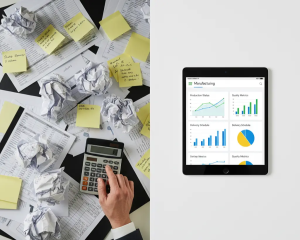
The Problem: Every morning starts with the same routine: pulling numbers from your ERP, checking email for updates, reviewing production schedules, and mentally calculating what needs attention today. It takes 30-60 minutes before you can actually start working.
The Automation: A custom dashboard pulls data from all your systems overnight and displays everything you need in one place: orders due this week, machines scheduled for maintenance, inventory running low, and quality metrics. It updates automatically every hour.
According to industry research from NIST’s Manufacturing Extension Partnership, utilizing data through AI-enhanced monitoring enhances data-driven decision making in small and medium manufacturers.
Time Saved: 5-7 hours per week (30-45 min daily)
ROI Impact: Faster decision-making, catch issues earlier, better resource allocation
Why Work with an Expert? This is where automation for small manufacturers requires real expertise. Anyone can pull data into a dashboard—but knowing which metrics actually drive decisions in your shop, how to structure the data for quick daily insights, and ensuring your various systems (ERP, quality software, scheduling tools) all feed in correctly requires someone who understands both the technology and manufacturing operations. We’ve seen shops spend months trying to build this themselves, only to end up with dashboards that show data but don’t answer their actual questions.
Automated Inspection Reminders (Essential Manufacturing Automation)
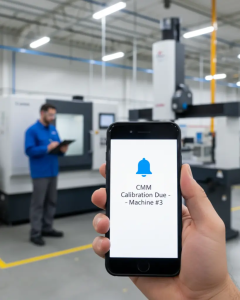
The Problem: Equipment calibrations, preventive maintenance, and inspection schedules are tracked on spreadsheets or whiteboards. Things get missed, leading to compliance issues or unexpected downtime.
The Automation: The system tracks all your recurring maintenance, calibrations, and inspections. It automatically sends reminders to the right people at the right time—with escalating notifications if tasks aren’t completed.
Time Saved: 2-3 hours per week (less fire-fighting, no more scrambling)
ROI Impact: Avoid failed audits, reduce unplanned downtime, extend equipment life
Why Work with an Expert? The software exists, but here’s what trips up most shops: migrating your existing schedules without gaps, setting up escalation paths that match your org structure, and creating reminder logic that doesn’t overwhelm people with notifications they’ll ignore. We help you build a system that your team actually uses—not another tool that gets abandoned because it wasn’t thoughtfully configured for how your shop actually operates.
Customer Email Summaries for Your Sales Team
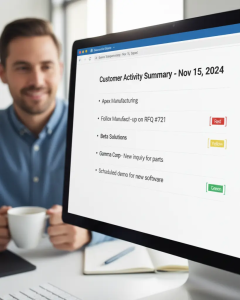
The Problem: Your sales team misses customer emails buried in their inbox. Important inquiries get delayed responses. There’s no easy way to know who needs attention today.
The Automation: Every morning, your team receives a digest email summarizing all customer interactions from the previous day: who emailed, who opened a quote, whose orders are ready to ship. It prioritizes what needs immediate attention. Email automation for small manufacturers like this ensures nothing falls through the cracks.
Time Saved: 4-5 hours per week across your sales team
ROI Impact: Faster response times = happier customers and more closed deals
Why Work with an Expert? The difference between a useful digest and email noise is in the filtering logic. Which customer actions actually matter? How do you prioritize a new RFQ versus a follow-up on an existing quote? What triggers should escalate to management? These strategic decisions determine whether your team embraces this tool or starts ignoring it within a week. We design the logic based on how your sales process actually works—not generic best practices that don’t fit your business.
Weekly Performance Reports That Generate Themselves
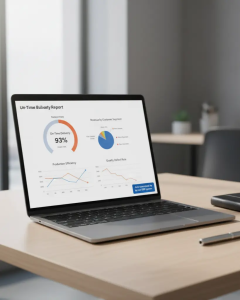
The Problem: Preparing weekly or monthly performance reports is tedious. Pulling data from multiple systems, building spreadsheets, creating charts—it can consume half a day or more. Often, these reports get skipped when things get busy.
The Automation: Key metrics are automatically compiled every week (or month) and formatted into a professional report. It’s emailed to stakeholders every Friday morning without anyone lifting a finger.
Time Saved: 3-4 hours per week (or 8-12 hours per month for monthly reports)
ROI Impact: Consistent visibility into performance trends, data-driven decisions, catch problems earlier
Why Work with an Expert? Here’s what we see all the time: shops generate automated reports that nobody reads because they’re full of irrelevant data or missing the critical context. The real expertise is knowing which KPIs matter for your business model, how to present trends (not just numbers), and ensuring the report format makes it easy to spot problems and opportunities at a glance. We build reports that drive action—not just check a box.
The Real ROI of Automation for Small Manufacturers
Let’s add it up. These five automations alone can save:
⏱️ 17-23 hours per week
That’s like getting an extra half-time employee—without payroll, benefits, or management overhead. For most small manufacturers, that’s worth $15,000-$25,000 annually in recovered time.
But the value of automation for small manufacturers goes beyond hours saved:
– Fewer missed opportunities because follow-ups happen consistently
– Faster response times that improve customer satisfaction
– Better decision-making with real-time data visibility
– Less stress knowing nothing is falling through the cracks
– More scalability without hiring more administrative staff
But Is This Actually Easy to Implement?
| Common Concerns We Hear: | Reality: |
|---|---|
| “Sounds expensive.” | Many automation tools have free tiers or cost $50-200/month. Your first automation typically pays for itself within 4-6 weeks. |
| “I don’t have time to set this up.” | Most individual automations take 1-4 hours to configure. You can start with just one, see the impact, then add more over time. The beauty of automation for small manufacturers is that you build incrementally—not all at once. |
| “My team will resist change.” | When automation removes annoying busy work, people embrace it quickly. The key is starting with pain points your team already complains about. |
| “My systems are too old for this.” | Modern automation tools are designed to work with legacy systems. If you can export a CSV file or send an email, you can automate it. |
Once your automations are in place, the next step is modernizing without replacing your systems so everything works together smoothly.
Your Next Step with Automation for Small Manufacturers

You don’t need to implement all five of these automations at once. The smartest approach? Start with the one that will save you the most time or solve your biggest pain point right now.
That’s where we can help.
Our free modernization audit is designed specifically for small manufacturers like yours. We’ll:
– Walk through your current workflows together
– Identify which automations would deliver the fastest ROI
– Show you exactly how they’d work in your operation
– Give you a clear implementation roadmap with realistic timelines and costs
No pressure. No sales pitch. Just practical guidance to help you make an informed decision about whether automation makes sense for your shop right now.
Let’s find out which of these automations would pay off fastest for your shop — book your free modernization audit.
The shops saving 15-20 hours per week started with a single automation. What will yours be?